
Pursuit of Perfection
Evolution of Computer Graphics
Eurographics was formed (Carlson).
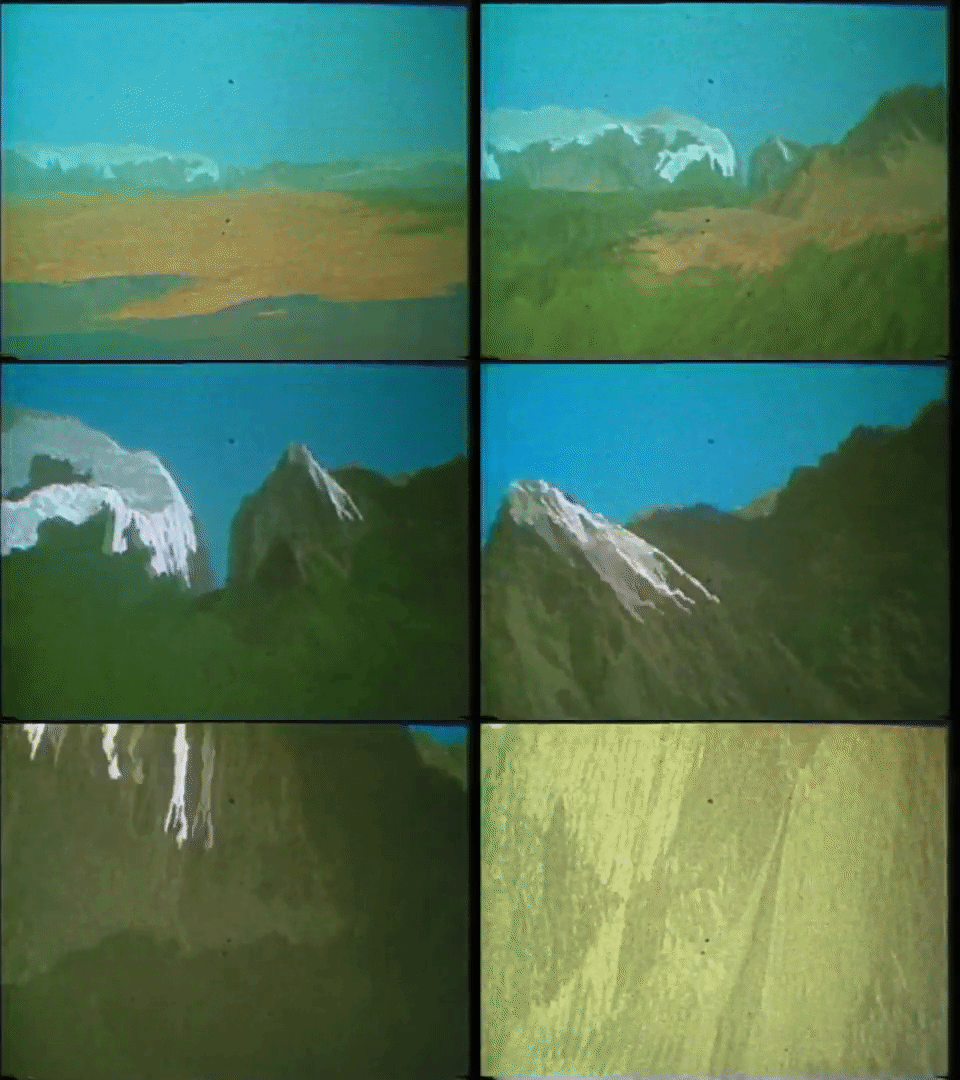
Loren Carpenter, a designer at Boeing, showed a video of a 3D fractal-generated landscape called “Vol Libre” at SIGGRAPH (Carlson). This was a huge leap forward in creating believable landscapes (Carlson).
1980
Quintal produced Paintbox, one of the first widely used paint systems (Carlson).
"Looker" was the very first movie to use shaded 3D CG (Carlson).
1981
Autodesk Inc. was established by John Walker and Dan Drake, and developed an important design software, AutoCAD (Sevo).
Bill Reeves invented a method for generating particle systems used to create seemingly random groupings of simple objects likes leaves (Carlson).
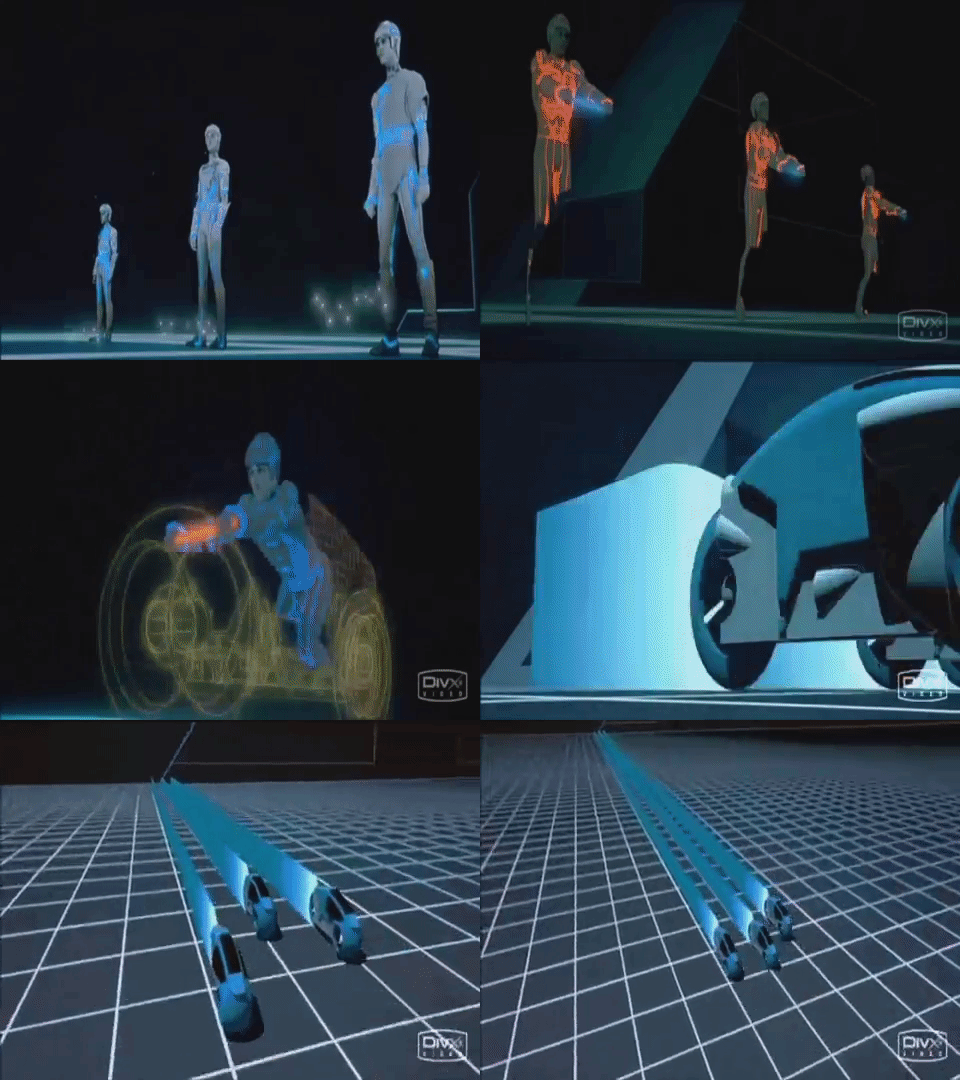
Disney's "Tron" had more CG than any previous movie, about 20 minutes of rendered footage, but it didn’t do well in the box-office and studios weren’t convinced of the computer’s potential to improve films (Carlson).
1982
The Special Effects Computer Group at ILM created the “genesis effect” in “StarTrek: Wrath of Khan” of a planet coming back to life with fractals, particle effects, and RGBA paint (Moltenbrey).

The Road to Point Reyes was developed at Lucasfilms by Rob Cook, Ray Smith, Loren Carpenter, Tom Porter, Bill Reeves, and David Salesin using shading, hidden surface routines, fractals (“Computer History”), and particle effects (Carlson). Described as a “one-frame movie”, it took over a month to render this image (“Computer History”). They also developed REYES (Renders Everything You Ever Saw) a scalene rendering algorithm they developed which became the basis for the RenderMan shading language (Carlson).
1983

TARGA displays allowed users to use 32 bit color graphics (Sevo).
Wavefront was the first commercially available 3D modeling and animation studio, meaning animation companies didn’t have to write their own software (Sevo).
1984
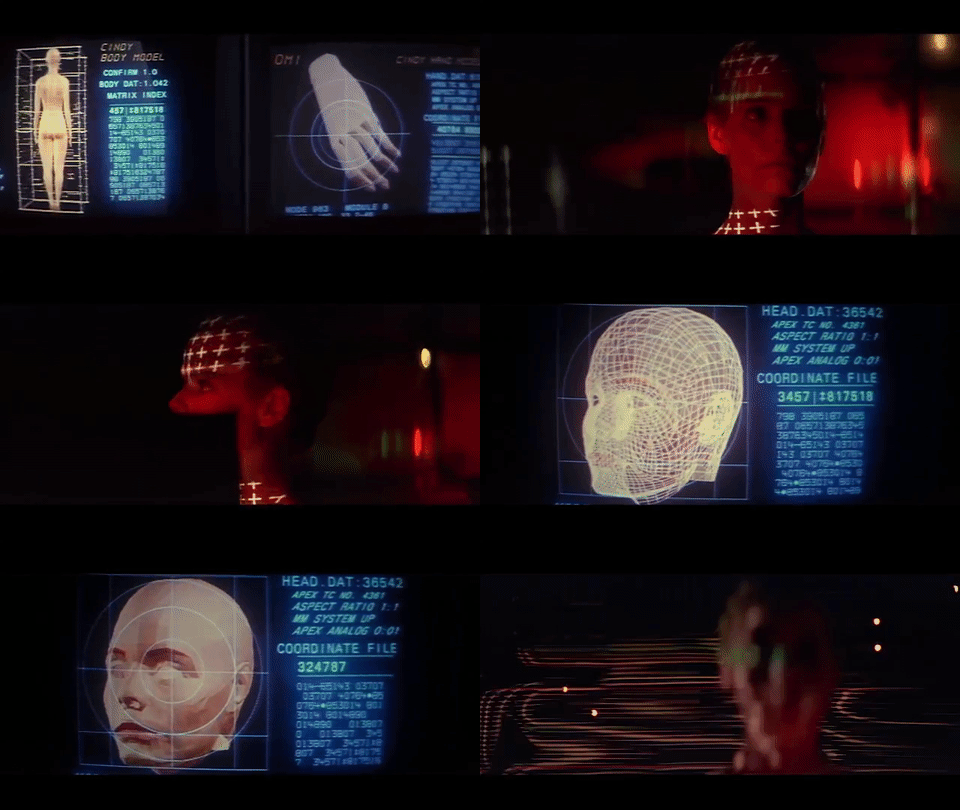
Sexy Robot was rendered with a shiny, metal-like surface (Moltenbrey). Her movements were mapped to that of an actress using points drawn on her body (Moltenbrey). She was the very first CG character in a television commercial (Moltenbrey).
1985

Global illumination, a method for realistically rendering the bounce lighting within shadows was invented by Jim Kajiya at Cal Tech (Carlson).
Mayo Medical School developed an interactive 3D model of the human heart that allowed doctors and medical students to analyze the volume of blood being pumped through its chambers (Moltenbrey).
Pixar was formed when Steve Jobs bought the Special Effects Computer Group from Lucasfilms for 10 million dollars (“Computer History”). Their animated feature "Luxo Jr". was a big leap forward in computer animation.
1986
Pixar also created the first 3D CG character in a film, the stained glass knight in “Young Sherlock Holmes" (Moltenbrey).
Using video game technologies, SGI (Silicon Graphics Incorporated) Technologies uses the 3DMV workstation to create an explorable 3d model of the human body by flying through it in real time (Moltenbrey).
The movie “Willow” includes computer morphing techniques created at ILM (Sevo).
Apple released the first Macintosh Computer (Sevo).
1987

Ed Catmull became the chairman of Pixar (Sevo).
Karl Sims advanced particle systems (Carlson).
Adobe Systems released Photoshop (Carlson).
1988
3D Data Visualization software was developed by NASA and offered freely to the public (Moltenbrey).
“The Abyss”, a science fiction film by James Cameron, was the most graphically advanced film created at the time ("Computer History"). ILM won an Academy Award for its visual effects work on the film (Carlson). ILM used Photoshop extensively during the post-production phase (“Computer History”).
1989
