Pursuit of Perfection
Evolution of Computer Graphics
The liquid metal terminator, T-1000, in “Terminator 2: Judgement Day” was crafted at ILM (Moltenbrey). It set a new standard for special effects (Sevo). At the time it was the most expensive movie ever made, costing over 100 million dollars to make (“Computer History”).
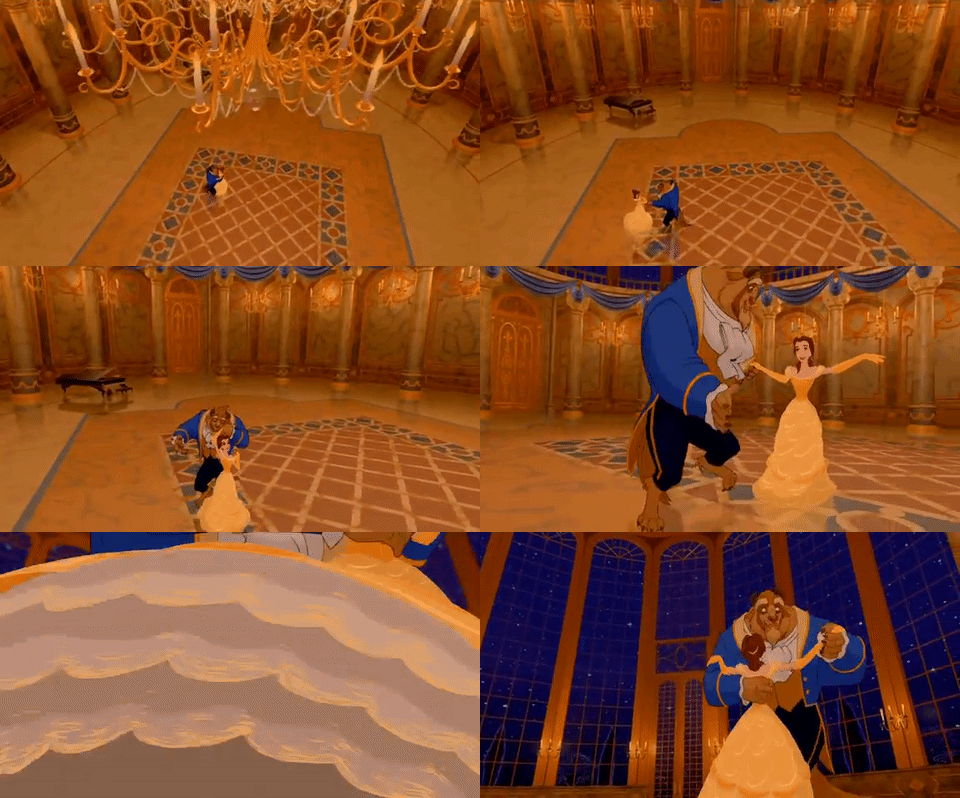
"Beauty and the Beast" is the first Disney film to have hand animated characters on a 3D background (Carlson).
1991
SGI introduced OpenGL, a graphics library, and it quickly became the industry standard (Carlson).
"Lawnmower Man" had long CG sequences and was about life in virtual reality (Carlson).
1992
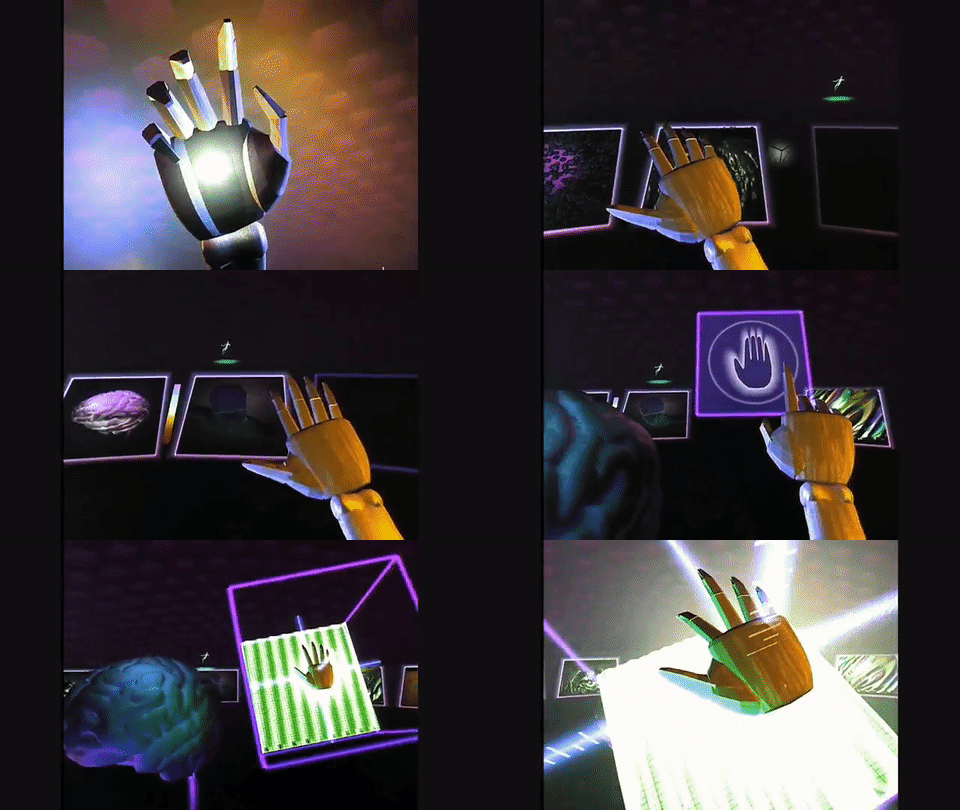
CD rom technology allowed for 3D games with more advanced CG like "Doom" and "Myst" (“Computer History”).
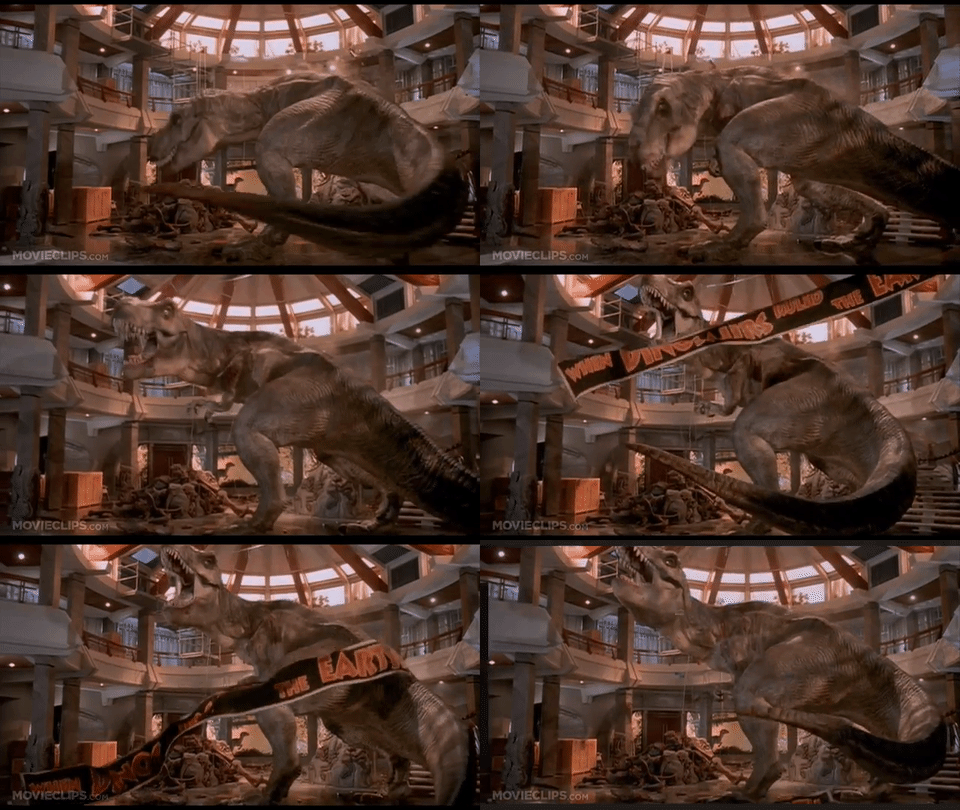
"Jurassic Park" was a huge leap forward in CG, but the mix of practical and digital effects is what makes this film successful (Carlson). New methods for rendering animals were developed for this film, but it only includes 14 minutes of CG because it would take days to render a single frame (Carlson). The smooth quality of the renders were "degraded" to blend in with the rest of the live action while practical effects were blended with CG so well that the dinosaurs felt believable (Manovich 204).
Ed Catmull was awarded by the Academy of Motion Pictures for his lifetime contributions to the CG industry (Carlson).
1993
The Stanford Bunny was range scanned from a sculpture of a terra cotta bunny (Carlson). “A range scan is a grid of distance values that tell how far the points on a physical object is from the device that creates the scans (usually known as a range scanner)” (Carlson). Basically this is a 3D scanned object. The Stanford Bunny has become another famous experimental model for computer graphics researchers because of its interesting geometry (Carlson).
1994
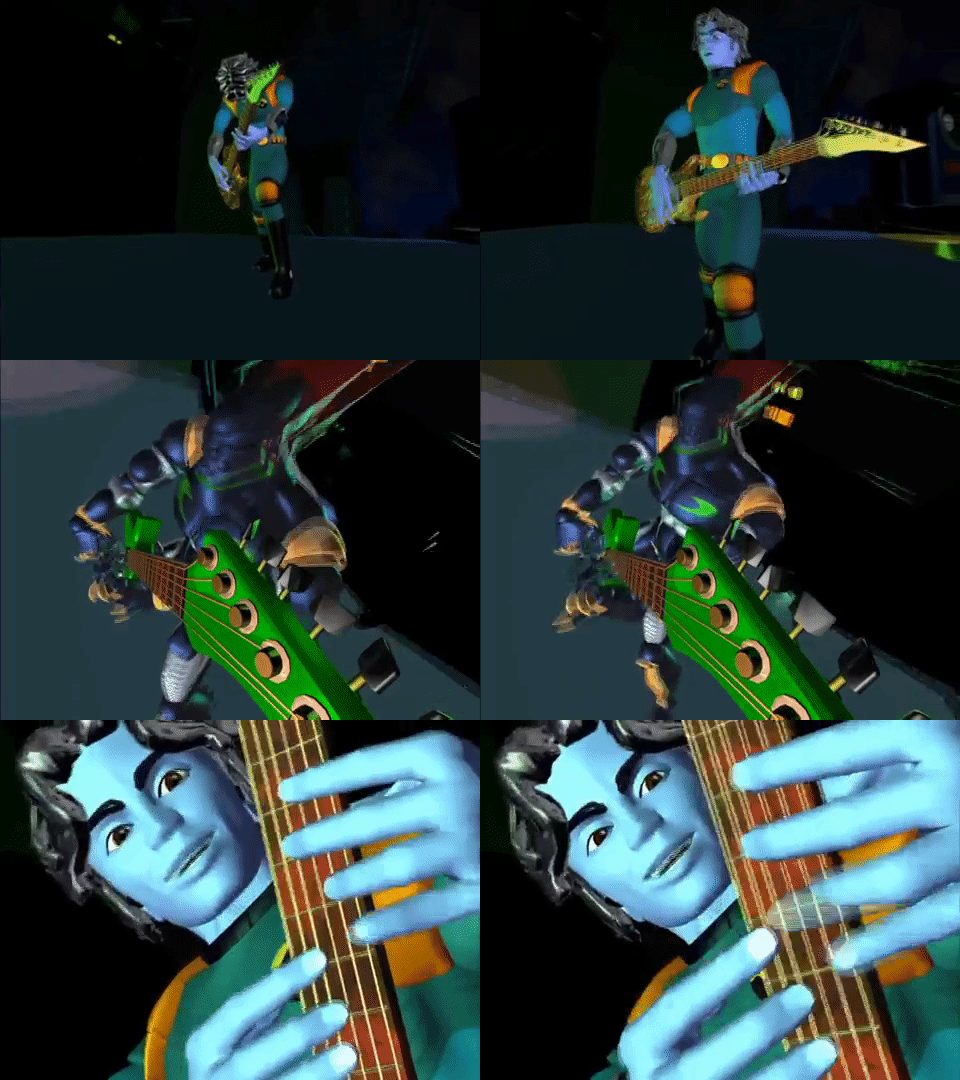
"Reboot" was the first fully CG TV show (Carlson).
SGI acquired the two major CG studio softwares, Alias and Wavefront and merged them (Carlson).
Pixar unveiled the first fully CG feature-length film, "Toy Story", and it was a box office success (Carlson).
“Jumanji” built off of the work done in “Jurassic Park” to bring audiences realistic CG animals (Carlson).
1995
Nvidia's Voodoo graphics accelerator was released to keep up with the demand for more complex 3D graphics (“Computer History”).
Quake was released, and although it required graphics acceleration to play well, it was a large step toward realism in gaming (Sevo).
1996
"Unreal" was a game that featured "shadows, reflections, and transparency” (Manovich 195).
"Titanic" used 3D CG to make some of the distant shots of the ship, waves, sky, and people (Sevo).
1997
SGI released the 3D modeling and animation tool, Maya, using code form older Wavefront and Alias systems (“Computer History”).
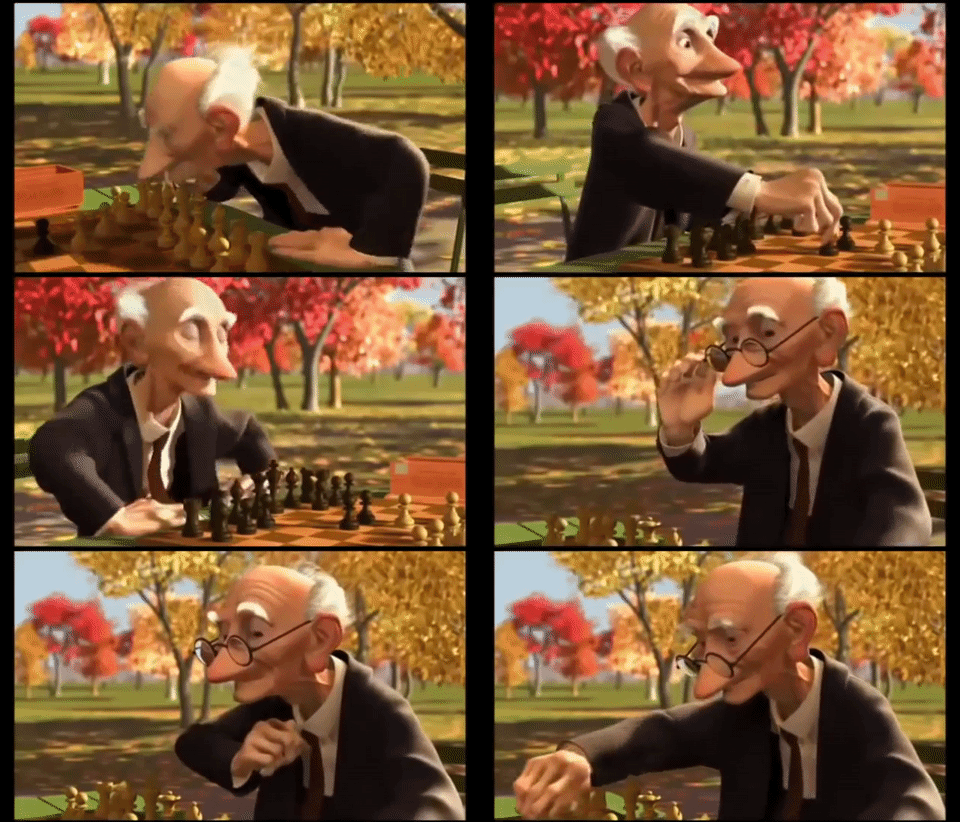
Pixar wanted to push the computer’s capabilities for rendering human characters and cloth in their short "Geri’s Game" (Moltenbrey). They also tackled translucency in their second full length CG film, “A Bug’s Life” (Sevo).
1998

Nvidia created the first dedicated Graphics Processing Unit (GPU), the GeForce 256, to deal with the high demand of more graphically intensive applications (“Computer History”). By dedicating a processor that specializes in graphics calculations, it frees up the Central Processing Unit (CPU) to do other tasks (“Computer History”).
"Star Wars Episode 1: The Phantom Menace” had thousands of digital effects, including a frequently appearing CG character that wasn't well liked (Carlson).
1999